Laser Treatment for Kidney Stones: How Does It Work?
Kidney stones can be extremely painful and can interfere with everyday activities. While some small stones may pass naturally with plenty of fluids and medication, larger or difficult-to-pass stones may require a medical procedure. One of the commonly used modern options is laser treatment for kidney stones, which uses advanced technology to break stones into smaller pieces so they can be removed or passed more easily.
If you are looking for the Best Urologist in Rohini, understanding how laser stone treatment works, when it may be recommended, and what recovery involves can help you make a more informed decision about your treatment.
What Are Kidney Stones?
Kidney stones are hard deposits that form when certain minerals and salts become concentrated in the urine and crystallize. They can develop inside the kidneys and may move into the ureters, the narrow tubes that carry urine from the kidneys to the bladder.
The size and location of a stone can determine whether it will pass on its own or require treatment. Smaller stones often pass naturally, while larger stones may cause severe pain, urinary obstruction, bleeding, nausea, or repeated infections.
Common symptoms include:
- Sharp pain in the side, back, or lower abdomen
- Pain that comes and goes in waves
- Blood in the urine
- Burning or discomfort while urinating
- Frequent urge to urinate
- Nausea or vomiting
- Fever or chills when an infection is present
If symptoms are severe or persistent, consulting the Best Urologist in Rohini can help identify the stone’s size and location and determine the most appropriate treatment.
What Is Laser Treatment for Kidney Stones?
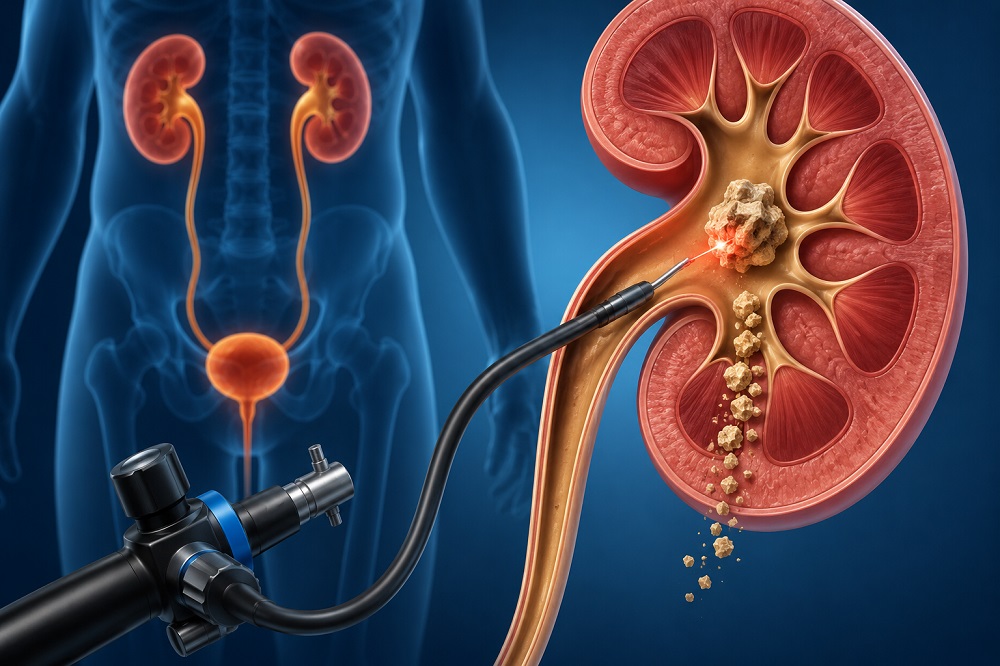
Laser treatment is a minimally invasive procedure used to break kidney or ureteric stones into smaller fragments. One of the techniques commonly used is ureteroscopy with laser lithotripsy.
During the procedure, a thin instrument called a ureteroscope is gently passed through the natural urinary passage into the bladder and then toward the ureter or kidney. Once the stone is located, a laser fiber is used to break it into tiny pieces.
Depending on the stone, the fragments may either be removed using specialized instruments or reduced to very small particles that can pass naturally through urine.
Unlike traditional open surgery, this approach generally does not require a large incision, which can contribute to a relatively quicker recovery.
How Does Kidney Stone Laser Treatment Work?
The procedure usually follows several important steps.
1. Initial Evaluation
Before treatment, the urologist reviews your symptoms and medical history. Imaging tests such as an ultrasound or CT scan may be recommended to determine the stone’s size, number, and location.
The doctor may also recommend urine and blood tests to check for infection and assess overall health.
2. Anesthesia
Laser stone treatment is generally performed under anesthesia, helping the patient remain comfortable throughout the procedure.
3. Ureteroscope Insertion
The urologist carefully guides a thin ureteroscope through the urinary passage and bladder toward the stone. Because the instrument enters through the natural urinary tract, an external surgical incision is usually not required.
4. Laser Fragmentation
Once the stone is identified, a fine laser fiber is used to break it into smaller fragments. The energy is carefully controlled to target the stone while minimizing damage to surrounding tissues.
Depending on the situation, the stone may be broken into larger pieces for removal or into very fine particles.
5. Stone Removal
Small fragments may pass naturally through urine. Larger pieces can be removed with a small retrieval basket or another specialized instrument.
In some cases, the urologist may place a temporary ureteral stent to help urine flow and support healing.
Why Is Laser Treatment Used for Kidney Stones?
Laser treatment has become a popular option because it can be useful for stones in different parts of the urinary system.
Some potential advantages include:
- No large external incision
- Ability to treat stones in difficult locations
- Effective fragmentation of many types of stones
- Less invasive than traditional open surgery
- Usually a shorter recovery period
- Potential for same-day or short hospital stay in suitable cases
However, no single treatment is ideal for every patient. Stone size, location, composition, urinary anatomy, infection, and overall health all influence the treatment choice.
A consultation with the Best Urologist in Rohini can help determine whether laser treatment is appropriate for your specific condition.
Who May Need Laser Treatment for Kidney Stones?
Laser treatment may be considered when:
- The stone is too large to pass naturally
- A stone is blocking urine flow
- Pain continues despite medication
- The stone remains in the urinary tract
- There are recurrent urinary infections associated with the stone
- Other non-invasive treatments have not been successful
- The stone is located in an area that makes natural passage difficult
Your urologist will generally consider imaging findings and your symptoms before recommending the procedure.
Is Laser Treatment Painful?
Because the procedure is usually performed under anesthesia, you should not feel the laser treatment itself. Some patients may experience mild discomfort, burning during urination, urinary frequency, or blood in the urine for a short period afterward.
If a ureteral stent is placed, it can sometimes cause temporary discomfort or an increased urge to urinate. These symptoms generally improve after the stent is removed or as the urinary tract recovers.
What Is Recovery Like?
One of the appealing aspects of Kidney Stone Laser Treatment in Rohini is that recovery is often relatively quick compared with traditional surgical approaches.
Your recovery time can vary depending on the size and location of the stone, the complexity of the procedure, and your general health.
After treatment, your doctor may advise you to:
- Drink adequate fluids unless medically restricted
- Take prescribed medicines as directed
- Avoid strenuous activity for a short period
- Watch for fever, severe pain, or difficulty urinating
- Attend follow-up appointments
- Follow recommendations for preventing future stones
Some patients can return to normal daily activities within a few days, although your doctor will provide advice based on your individual situation.
Can Kidney Stones Come Back After Laser Treatment?
Laser treatment can remove existing stones, but it does not automatically prevent new stones from forming.
Kidney stones can recur if the underlying causes are not addressed. Your urologist may recommend dietary changes, increased fluid intake, metabolic testing, or other measures depending on the type of stone and your medical history.
Preventive steps may include drinking enough water, reducing excessive salt intake, maintaining a balanced diet, and following personalized dietary advice.
Are There Any Risks?
Although laser stone treatment is considered minimally invasive, every medical procedure has potential risks.
Possible complications may include:
- Temporary blood in the urine
- Urinary discomfort
- Infection
- Ureteral irritation or injury
- Residual stone fragments
- Need for additional treatment in some cases
- Temporary discomfort from a ureteral stent
Your urologist will discuss the expected benefits and possible risks before the procedure.
When Should You See a Urologist?
Do not ignore symptoms that could indicate a kidney stone. Seek medical evaluation if you experience persistent side or back pain, blood in your urine, painful urination, repeated urinary infections, or difficulty passing urine.
A fever accompanied by severe urinary symptoms can indicate an infection and requires prompt medical attention.
Choosing the Best Urologist in Rohini is about more than simply finding a specialist. Look for a doctor who carefully evaluates your condition, explains your treatment options clearly, and recommends an approach suited to your individual needs.
What Can You Expect During a Consultation?
During your appointment, the urologist may ask about your symptoms, previous kidney stones, medications, diet, fluid intake, and medical history. Imaging and laboratory tests may be recommended when necessary.
Based on the findings, your doctor may discuss several options, ranging from observation and medication to procedures such as shock-wave treatment or ureteroscopy with laser lithotripsy.
If laser treatment is recommended, your doctor should explain the procedure, expected recovery, possible risks, and follow-up plan before treatment begins.
Final Thoughts
Kidney stones can be uncomfortable and, in some cases, can lead to urinary blockage or infection. Modern laser technology provides a minimally invasive way to break and remove many kidney and ureteric stones without the need for a large surgical incision.
Kidney Stone Laser Treatment in Rohini may be an effective option for patients whose stones are unlikely to pass naturally or who continue to experience significant symptoms. However, the right treatment depends on the individual patient and the characteristics of the stone.
If you are experiencing recurring kidney stone symptoms, consulting the Best Urologist in Rohini can help you understand the cause of your symptoms and explore appropriate treatment options. Early evaluation can also help reduce the risk of complications and guide you toward strategies for preventing future stones.